
The Concussion Breakthrough
Written by Ayla Wolf, DAOM
Read Dr. Wolf’s full bio →A new roadmap for post-concussion recovery — by Dr. Ayla Wolf, DAOM.
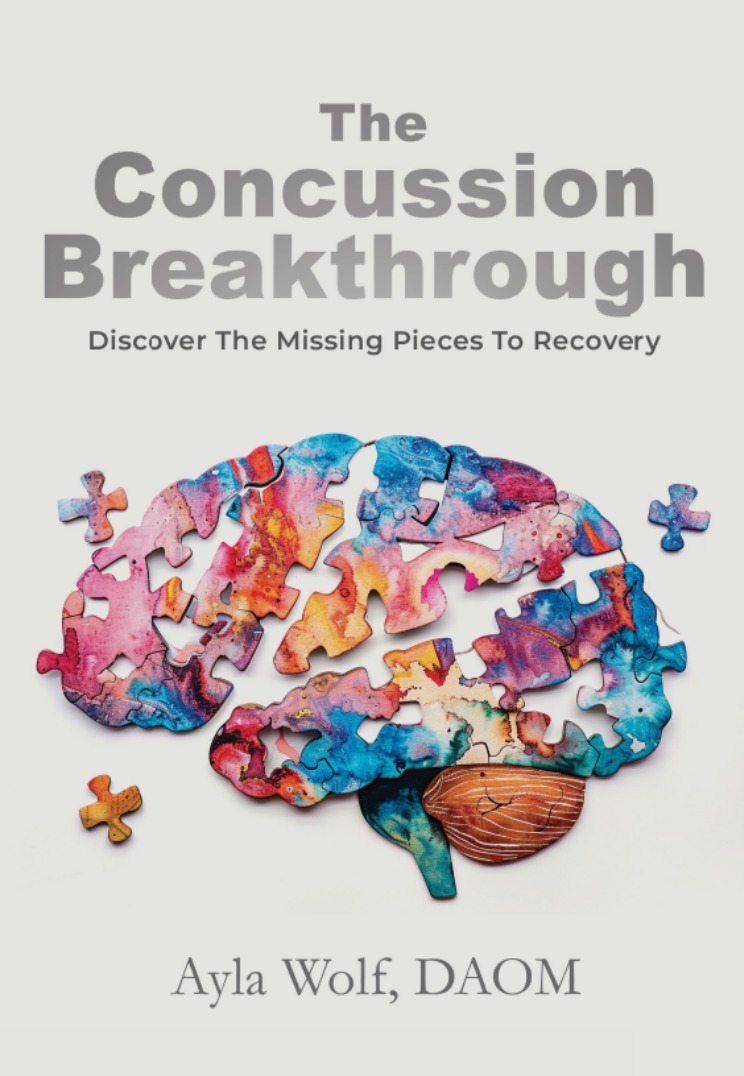
Now in its Second Edition
A practical roadmap for persistent concussion symptoms
Written by Ayla Wolf, DAOM, The Concussion Breakthrough helps readers make sense of persistent symptoms, ask better questions, and understand the pieces that can shape recovery.
View the book on Amazon →"Your scans are normal." "You'll be fine in a few days." "There's nothing else we can do."
If you've heard those words — yet you're still struggling with headaches, dizziness, brain fog, anxiety, sleep issues, or fatigue months or even years later — you are not alone. And you are not imagining your symptoms.
That's why Dr. Wolf wrote The Concussion Breakthrough: Discover the Missing Pieces to Recovery. This book was created for the millions of people each year who do not recover within the expected window after a concussion. While awareness around concussion diagnosis has increased, treatment for persistent post-concussion syndrome has lagged behind. Too many people are left confused, dismissed, or without a clear path forward. This book closes that gap.
Why Concussion Recovery Is So Complicated
No two concussions are alike. While some people recover within a few weeks, research now suggests that a meaningful percentage of individuals continue to experience symptoms well beyond three months. These symptoms can affect:
- ✓Head pain and pressure
- ✓Neck tension and cervicogenic headaches
- ✓Dizziness and vertigo
- ✓Brain fog and cognitive slowing
- ✓Autonomic dysfunction (POTS-like symptoms)
- ✓Hormonal disruption
- ✓Mood changes
- ✓Sleep disorders
Yet standard imaging like CT scans and routine MRI often appear "normal." But normal imaging does not mean normal function. Concussions are frequently functional injuries — affecting how neural networks communicate — rather than gross structural injuries. The injury is real. It's just often microscopic and more functional in nature.
A Three-Step Roadmap to Recovery
Step 1
Categorize Your Symptoms
Rather than lumping all symptoms together, the book introduces the Concussion Impact Tracker — a structured tool that organizes symptoms into nine categories: post-traumatic headaches, neck pain, autonomic dysregulation, cognitive dysfunction, vestibular dysfunction, oculomotor changes, mood disturbances, sleep disorders, and brain inflammation. This is not just a checklist — it's a framework for identifying how your concussion uniquely presents.
Step 2
Get the Right Testing
Once symptoms are categorized, the next step is appropriate diagnostic evaluation. A comprehensive functional neurological exam may include autonomic nervous system testing, cranial nerve evaluation, balance and vestibular testing, oculomotor and pupillary assessment, structural cervical spine evaluation, neurocognitive testing, and hormone and laboratory testing when indicated. Functional exams assess how brain 'software' is performing — not just whether the 'hardware' appears intact.
Step 3
Targeted, Individualized Treatment
Because no two concussions are alike, no two treatment plans should be alike. The book outlines evidence-based treatments — vestibular rehabilitation, vision therapy, cervical spine intervention, autonomic nervous system regulation, hormonal support, targeted neuromodulation, neuroinflammation reduction, and cognitive rehabilitation — that are often not discussed in standard medical care but are supported by emerging neuroscience.
Why This Book Is Different
Many people with persistent post-concussion syndrome experience what feels like medical gaslighting — being told nothing is wrong because scans are normal. This book validates that experience. It explains:
- ✓Why "mild traumatic brain injury" does not mean mild symptoms
- ✓Why imaging may miss functional disruption
- ✓Why symptoms can persist even when outward structures appear intact
- ✓How brain networks can be retrained and strengthened
Most importantly, it provides language and structure so patients can communicate clearly with healthcare providers — improving the quality of care they receive.
Who This Book Is For
- ✓Individuals with persistent post-concussion syndrome
- ✓Parents of children with concussion
- ✓Athletes struggling with recovery
- ✓Caregivers
- ✓Healthcare providers seeking a structured framework
If you feel stuck, dismissed, or unsure what to do next, this book offers clarity and direction.
How It Connects to Our Clinic
At Healing Response Acupuncture & Functional Neurology, this framework guides our clinical approach every day. We use a functional nervous system assessment, objective biomarkers, autonomic testing, vision and balance evaluation, neurocognitive testing, acupuncture for neuroregulation and enhancing brain blood flow, and individualized rehabilitation strategies. The goal is not symptom suppression — it is restoring function.
Concussion recovery is not one-size-fits-all. It requires practitioners who are willing to spend extra time with their patients to explore the highly variable ways in which each individual has been affected by the brain injury.
YOU ARE NOT ALONE
You are not crazy. You are not alone. And recovery is possible.
If you or a loved one are struggling after a concussion, The Concussion Breakthrough can help you understand what may be missing — and how to move forward with confidence.
NOW AVAILABLE
The Concussion Breakthrough
By Dr. Ayla Wolf, DAOM
Discover the Missing Pieces to Recovery — a comprehensive 3-part system for individuals with persistent post-concussion syndrome.
Get on Amazon →Also by Dr. Wolf
The Art of Concussion Recovery
A thoughtful companion for the lived experience of healing.
Explore the companion book →What You'll Learn
- ✓How to categorize your symptoms into 9 meaningful groups
- ✓Which functional tests can reveal what standard imaging misses
- ✓Evidence-based treatments beyond pharmaceutical approaches
- ✓Why 'normal scans' don't mean normal function
- ✓How to communicate effectively with your healthcare team
Ready to Start Your Recovery?
Schedule a free consultation with our clinic to explore a personalized recovery plan.
Book a Consultation